

10 chapters
- 0:00 Robert Half: the jobs that came back, and Klarna
- 0:31 Gartner’s forecast: about 30% hired back by 2029
- 0:51 The catch: a forecast, and most cuts stick
- 1:14 Why the jobs came back, and what that takes
- 1:46 Labor is an investment, not an expense
- 2:37 Gartner: cutting first is the wrong order
- 3:04 On my team: AI took about a fifth of the work
- 3:28 Move one: cut tasks, not people
- 4:04 Move two: the tools to your best people first
- 4:24 Move three: put the time back into growth
Robert Half says more than 3 in 10 managers who cut jobs after bringing in AI already had to bring those jobs back. The same jobs, or ones very close to them.
Klarna, the buy now, pay later company, is the famous one. It once said its AI was doing the work of 700 customer service agents. Then in 2025, its CEO told Bloomberg that cost had been too big a factor in how they set it up. What you end up with, he said, is lower quality. So if you’re thinking about letting your admin go and handing the work to ChatGPT, this one’s for you.
About 30% hired back by 2029
Robert Half is a staffing firm, so take it with a grain of salt. But Gartner, the research firm big companies pay to tell them what’s coming, is saying the same thing, only bigger. On September 9 they put out a forecast. By 2029, about 30 percent of the people companies laid off and replaced with AI will have to be hired back, and often it costs more.
To be fair, that’s a forecast, and some analysts call the number guesswork. That also means about 7 in 10 of those cuts stick. One of Gartner’s own analysts even says some of these AI layoffs were really just budget cuts. They cut to save money and blamed AI.
But even when a cut sticks, the work doesn’t go anywhere. Somebody still has to do it. It lands on whoever’s left, and that’s usually your best people.
Why the jobs came back
So why did so many of those jobs come back? Robert Half asked, and the top answer was knowledge. 40 percent said the role needed context the AI just didn’t have. In a company your size, that’s the person who knows which customer hates phone calls, and which vendor actually picks up.
And think about what bringing a role back really takes. You already paid the severance, the money to send them off, and while the seat sat empty, the work slipped. Then you recruit all over again, you train all over again, and it takes months before the new person knows what the last one already did.
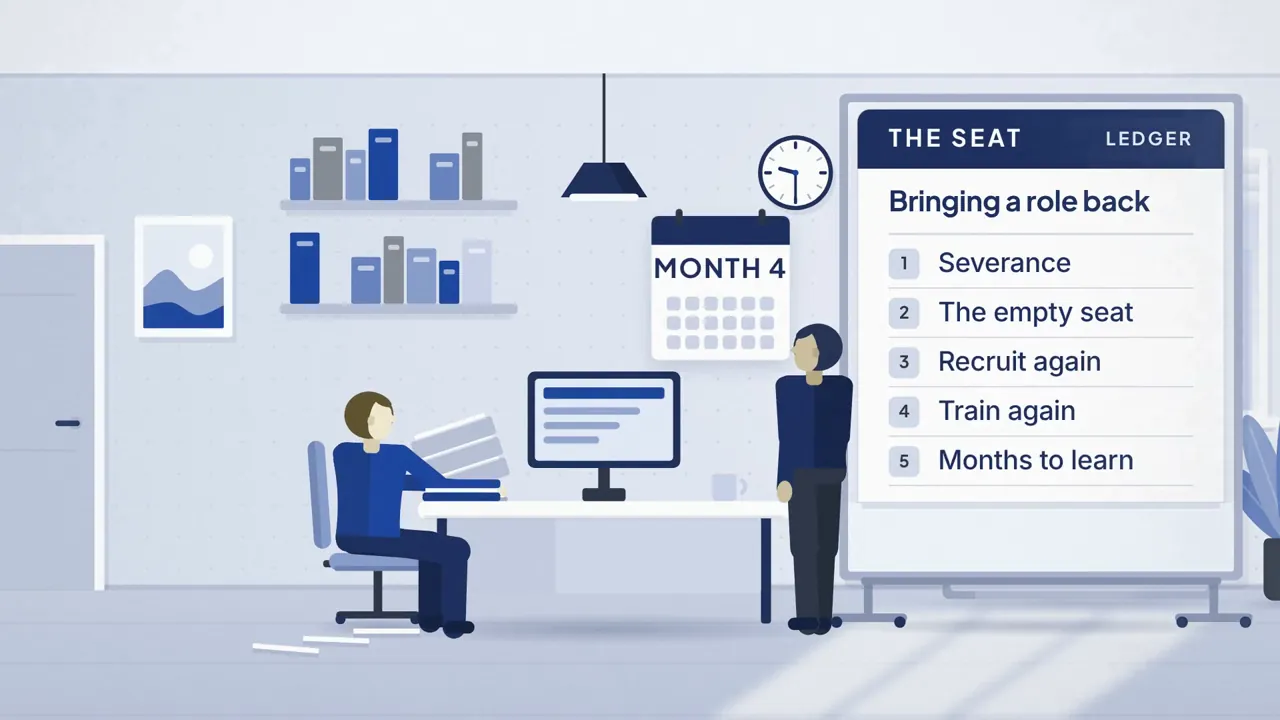
Labor is an investment, not an expense
I get the urge. As an owner, it’s so natural to think, labor is an expense. I’m paying that person’s mortgage with money that could be mine. I was exactly the same way. But I learned from studying business biographies that labor is the first investment. An expense is money that’s gone. An investment is money you put in that pays you back for years, and a good person is exactly that.
So when you cut a good person to pay for a tool, you didn’t cut a cost. You sold an investment, and if Gartner’s right, you’ll be buying it back at a higher price. You pay twice for the same seat.
Before you cut any role for AI, I put the five questions I’d ask, the ones that tell you if a role is safe to cut, into a free one-page checklist.
If someone just isn’t good enough, that’s a different conversation. But cutting a good person to fund a tool isn’t saving money. It’s borrowing it.
Cutting first is the wrong order
So if cutting people is the wrong trade, what’s the right one when you’re running 12 people, not 12,000?
Gartner, the research firm, says a lot of companies are cutting people for AI first and figuring out the work later. That’s the wrong order. One of Gartner’s analysts, Caitlyn McDonough, says companies decide how many people to let go before they understand what it will take to get the work done. Gartner surveyed heads of HR in July. Only about 1 in 5 said their company could even tell which work AI is changing.
On my own team, we did it the other way around. AI took about a fifth of the work. We put that time into work we’d never done before. Like getting feedback on every sales call a few minutes after it ends. That comes from a prompt we built, a set of written instructions we gave the AI.
And at a small company, the wrong order hurts more. When 3 people hold most of what your business knows, losing one of them means a third of what your business knows walks out the door.
Three things I’d do
1. Cut tasks, not people
Write down the work AI can take off everyone’s plate before you touch a single seat. Most of the time it’s a slice of every job, not one whole job.
Say you run a 10 person accounting firm, and you’re about to let your office manager, Nancy, go. Write down what she actually does in a week. AI can draft the reminder emails and the meeting notes. It can’t remember that one of your biggest clients only answers texts, or calm someone down in the middle of tax season. That’s the human part of her job. So you don’t cut Nancy. You hand AI her emails, and you give her the client check-ins nobody’s had time for.
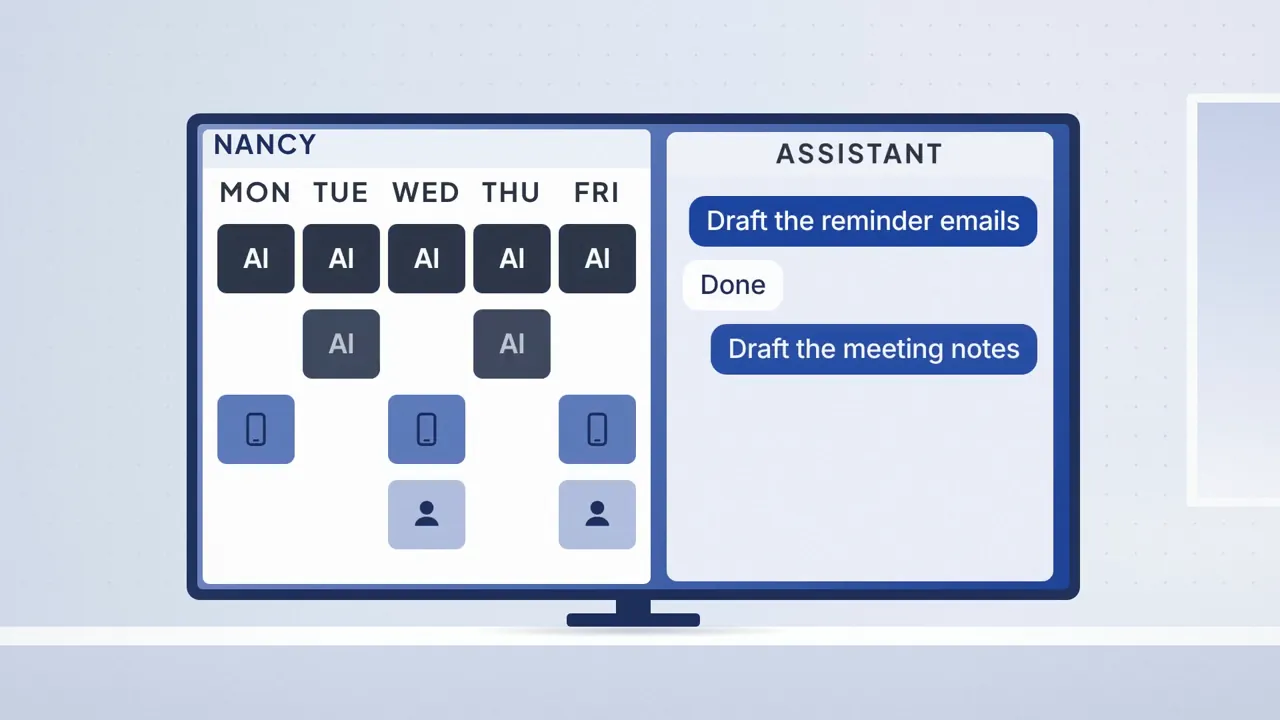
2. Give the tools to your best people first
AI is great at the one-to-ten work, the repeatable stuff, once a person has built the system. It’s nowhere near the zero-to-one work, the new idea, the new customer, something nobody’s done here before. Your A players, your best people, will run with it, and they’ll show the rest of the team how.
3. Put the time saved back into growth
Put it into growth, not into cutting costs. More calls, more follow-ups, the project you kept pushing to next quarter. Because growth takes great people. In my experience, the business only really levels up after you decide to keep and hire the best people you can find.
I made a free checklist that walks you through it, one role at a time, before anybody’s seat is on the table.
I’m long people
I’m in recruiting, so people ask me all the time if AI is going to put us out of business. I don’t think so. People have the ideas. People build the systems. People find the problems, and people solve them. I’m long people. I’m betting on them.
So which job would you hand to AI first? The emails, the scheduling, or the reports?
Questions people ask
Are companies hiring back people they replaced with AI?
Robert Half says more than 3 in 10 managers who cut jobs after bringing in AI already had to bring those jobs back. Gartner forecasts that by 2029, about 30 percent of the people companies laid off and replaced with AI will have to be hired back, and often it costs more.
Why did jobs cut for AI come back?
Robert Half asked, and the top answer was knowledge. 40 percent said the role needed context the AI just didn’t have.
Is labor an expense or an investment?
An expense is money that’s gone. An investment is money you put in that pays you back for years, and a good person is exactly that.
What does it cost to bring a role back?
You already paid the severance, and while the seat sat empty, the work slipped. Then you recruit all over again, you train all over again, and it takes months before the new person knows what the last one already did.
What should I do instead of cutting a role for AI?
Cut tasks, not people. Write down the work AI can take off everyone’s plate before you touch a single seat. Most of the time it’s a slice of every job, not one whole job.
Who should get the AI tools first?
Give the tools to your best people first. Your A players, your best people, will run with it, and they’ll show the rest of the team how.
Sources
- Robert Half: Labor market outlook through year-end 2026 (why roles came back)
- Robert Half: May 2026 Labor Market Update for employers and job seekers
- CIO: Gartner’s forecast, the analysts who question it, and AI washing
- Gartner: Gartner Predicts 30% of Employees Replaced by AI Will Be Rehired by 2029 (October 28, 2026)
Your next step
01
This checklist · free
Is This Role Safe to Cut? The Five Questions to Ask Before You Cut a Role for AI
The five questions I’d ask before you cut any role for AI, one role at a time, plus what bringing a seat back really costs and what to do instead.
Your first movePick one role and write down what that person actually does in a week. Mark the tasks AI can draft and the ones only a person can do.
02
Parker’s Library · free
Get free access to Parker’s whole library
One email opens every checklist and guide from Parker’s videos, right here on the site, and each new one as he adds it.
- Quitting Test: Grade Your Team Before Your Next Big Bet
- Culture Interview: Three Questions to Ask Before You Hire
- Scouted Checklist: The Questions to Ask AI About Your Own Company
- Is This Role Safe to Cut? Five Questions to Ask Before You Cut a Role for AI
- Seat Check: Questions to Ask Before You Refill a Seat
- +7 more
03
Work with Parker
Work with Parker
Pavago: search a role, match with the right people in seconds, and book interviews for tomorrow.